



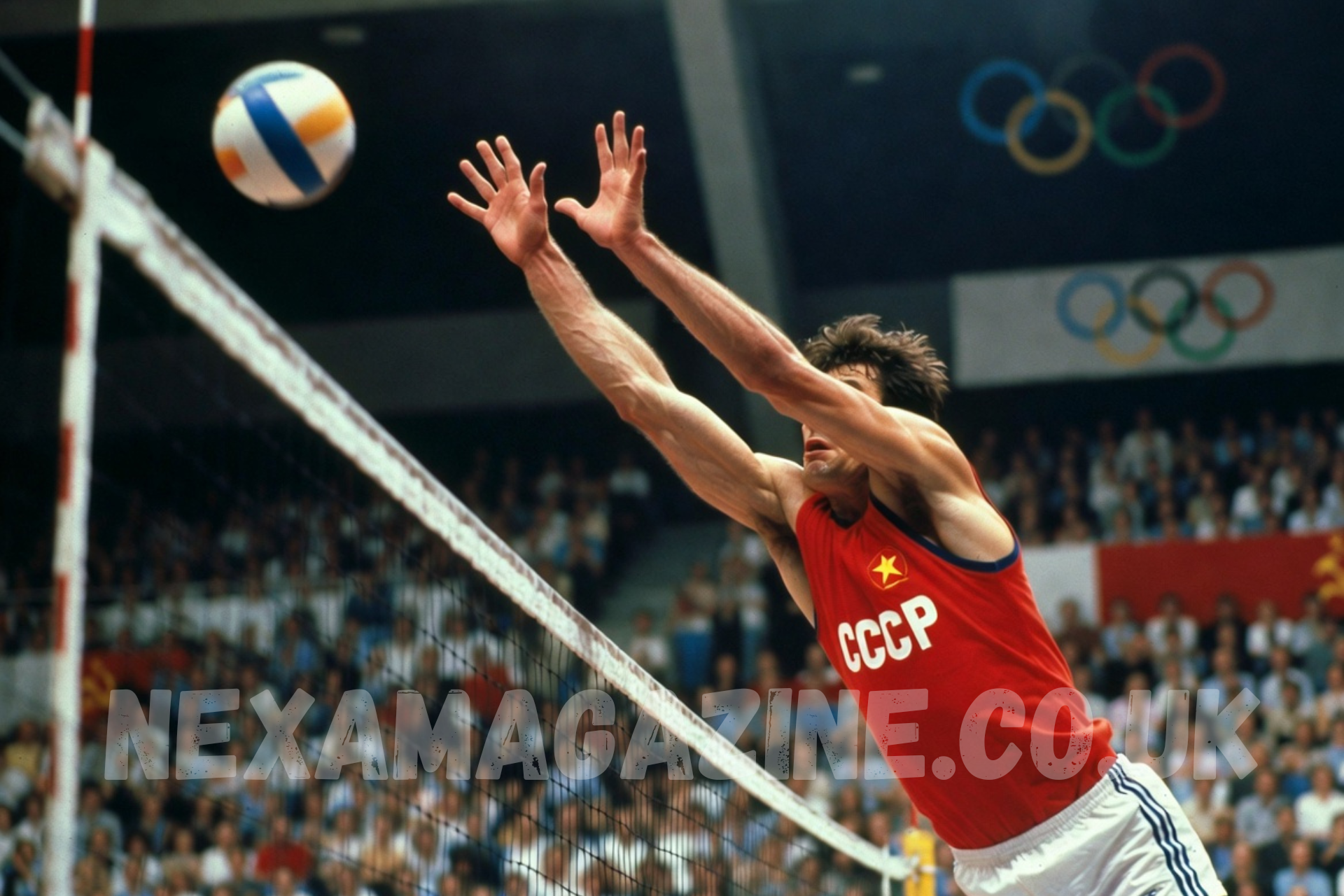
Have you ever watched an athlete who seems to defy physics? Tall, powerful, almost impossible to stop – yet moving with a grace that makes you do a double-take? That’s exactly what fans saw when Alexander Savin took to the volleyball court. Nicknamed “Alexander Savin The Flying Elephant Memoirs of an Olympic Champion,” this Soviet legend turned what looked like an unlikely combination of size and speed into pure dominance. His newly translated memoir, The Flying Elephant: Memoirs of an Olympic Champion, lets us step inside that world.
Read more : The Flying Elephant Kindle Edition
If you’re searching for real stories of grit, teamwork under pressure, and what it truly takes to reach Olympic gold, this book (and this guide) delivers. No fluff, no Hollywood gloss – just honest reflections from a man who lived the golden age of Soviet volleyball.
Who Is Alexander Savin? The Man Behind the Legend
Born on July 1, 1957, in Taganrog, Russia, Aleksandr Borisovich Savin grew up in a time when sports weren’t just games – they were a matter of national pride. Standing at around 2 meters tall, he had the build of a powerhouse. But what set him apart was his astonishing ability to leap, block, and attack with surprising lightness.
Teammates and opponents alike marveled at how someone so big could “fly.” The nickname “Flying Elephant” wasn’t mocking – it was affectionate respect for that rare mix of raw power and elegance. In his memoir, Savin reflects on how this label captured both the expectations placed on him and the joy he found in exceeding them.
He wasn’t born into privilege. Like many Soviet athletes of his generation, Savin came from humble roots. Hard work, disciplined training, and a deep love for the game propelled him forward. By the mid-1970s, he had earned a spot on the USSR national team, where he would help define an era.
Olympic Journey: From Silver Heartbreak to Moscow Gold
Savin’s first Olympic appearance came in 1976 in Montreal. The Soviet team took silver, losing a close final to Poland. Savin played every match, gaining invaluable experience but also feeling the sting of falling just short of the ultimate prize.
Four years later, on home soil in Moscow 1980, everything changed. The USSR team, featuring stars like Vyacheslav Zaytsev alongside Savin, dominated. They swept through pool play and claimed gold with a 3-1 victory over Bulgaria in the final. Savin was on the court for every single game – a true anchor in the middle blocker position.
Reading his memoir, you feel the weight of that moment. The roar of the home crowd, the pressure of representing an entire nation, the mix of exhaustion and euphoria. It wasn’t just about winning medals. It was about proving that years of sacrifice meant something.
Key Career Highlights:
- Olympic Games: Silver (1976 Montreal), Gold (1980 Moscow)
- World Championships: Gold in 1978 and 1982
- FIVB World Cup: Victories in 1977 and 1981
- European Championships: Multiple titles throughout the late 1970s and 1980s
- Longevity with the Soviet national team from 1975 to 1986
These aren’t just stats. In the book, Savin shares what happened behind closed doors – the brutal training camps, rivalries, friendships, and the political realities of competing during the Cold War era.
Why “The Flying Elephant” Perfectly Captures His Style
Imagine a middle blocker who could shut down the opposition’s strongest attacks while launching devastating counters. Savin excelled at reading the game, timing his jumps perfectly, and using his reach to dominate the net. Commentators often noted how he seemed to hang in the air, defying gravity.
The “elephant” part nods to his imposing physical presence. The “flying” celebrates the grace that made it all look effortless. In one memorable moment from the memoir, Savin recalls how critics doubted a big player could move so quickly—until he proved them wrong on the court. proved them wrong game after game.
This nickname became more than a tag. It symbolizes overcoming perceived limitations. Many young athletes today still draw inspiration from it: your body type or background doesn’t define your potential.
Inside the Memoir: What Makes This Book Special
*The Flying Elephant: Memoirs of an Olympic Champion* is far more than a typical sports autobiography filled with medals and victories. Written with help from his brother Andrei Savine (who handled the English translation), it feels like a heartfelt conversation.
Readers get:
- Hundreds of personal stories and unseen moments from championships
- Tributes to mentors and teammates who shaped him
- Honest reflections on the sacrifices of elite sport – family time missed, injuries pushed through, pressure handled
- Insights into Soviet sports culture: the system, the discipline, the camaraderie
- Rare archival photos that bring the era to life
Endorsements from volleyball greats like Doug Beal, Marv Dunphy, Sergey Tetyukhin, and Vladimir Alekno add extra weight. These legends don’t just praise the achievements – they highlight Savin’s character and lasting influence on the game.
One powerful quote from Savin sums up the book’s spirit: “True fame is human memory—when people who watched your games and cheered for you haven’t forgotten you.” This line hits hard because it shifts focus from personal glory to shared connection.
Lessons for Modern Athletes and Dreamers
You don’t need to play volleyball to gain from Savin’s story. His memoir is packed with practical wisdom:
- Resilience after setbacks: The 1976 silver fueled his 1980 gold. Failure isn’t the end – it’s fuel.
- Team over individual: Even as a star, Savin emphasizes collective effort. One player can’t win alone.
- Discipline in daily life: Soviet training was intense. Savin’s routines remind us that consistency beats talent alone.
- Staying grounded: Fame and medals come and go. What truly lasts is how you treat people and the impact you leave behind. you remember your roots.
- Adapting to change: After his playing days, Savin moved into coaching and other roles. Life after sport requires reinvention.
Real-life example: Many young middle blockers today study old footage of Savin’s blocking technique. His timing and positioning remain textbook examples in coaching clinics worldwide.
Parents of aspiring athletes often share how the book helps them understand the mental side of elite competition – the balance between pushing hard and avoiding burnout.
The Historical Context: Soviet Volleyball in Its Prime
The late 1970s and early 1980s marked a high point for men’s volleyball. The USSR team blended technical mastery, physical power, and tactical intelligence. Savin was central to that success.
Playing during the Cold War added layers. International matches carried extra meaning. Yet within the team, it was about passion for the sport. The memoir offers a nuanced look at this era without political grandstanding – just human experiences.
Who Should Read This Memoir?
- Volleyball fans wanting deeper history
- Athletes seeking motivation and practical advice
- Readers who enjoy authentic sports biographies (think Open by Andre Agassi or The Boys in the Boat)
- Anyone inspired by stories of overcoming odds
- Coaches looking for insights into team dynamics and player psychology
The Kindle edition makes it accessible worldwide, with easy navigation and photos that pop on digital devices.
Why This Story Matters in 2026
Sports have changed – more money, technology, global leagues. Yet the core challenges remain: dedication, handling pressure, finding joy in the process. Savin’s tale feels refreshingly timeless.
In a world of short attention spans and highlight reels, a full memoir like this invites us to slow down and appreciate the full journey. The translation project, driven by family, adds a touching personal layer. It shows how legacies are preserved across generations.
Final Thoughts: More Than a Sports Book
The Flying Elephant is ultimately a story about being human while chasing excellence. Alexander Savin didn’t just win medals – he inspired teammates, fans, and now readers with his honesty and perspective.
Whether you’re a seasoned volleyball enthusiast or someone who simply loves underdog-to-champion arcs, this memoir delivers. It reminds us that true success isn’t measured only in gold but in the memories we create and the lives we touch.
If you’ve ever felt “too big,” “too slow,” or doubted your ability to rise, Savin’s story proves otherwise. Sometimes the most unlikely flyers make the biggest impact.
Ready to dive in? Grab the Kindle edition and experience the flight for yourself. You might just find the motivation you’ve been searching for.
Source Verification
- Alexander Savin is a real former Soviet/Russian volleyball player who competed for the USSR national team during the 1970s–1980s.
- He was part of the Soviet team that won gold at the 1980 Moscow Olympic Games and silver at the 1976 Montreal Olympics.
- The USSR men’s volleyball team also achieved major success in this era, including World Championships and World Cup titles.
- Savin is widely recognized as one of the prominent middle blockers of the Soviet volleyball “golden era.”
- The nickname “Flying Elephant” is associated in volleyball circles with his size, power, and athletic jumping ability (commonly referenced in profiles/interviews and sports commentary).
- Memoir-style publications and translated editions about Soviet
