



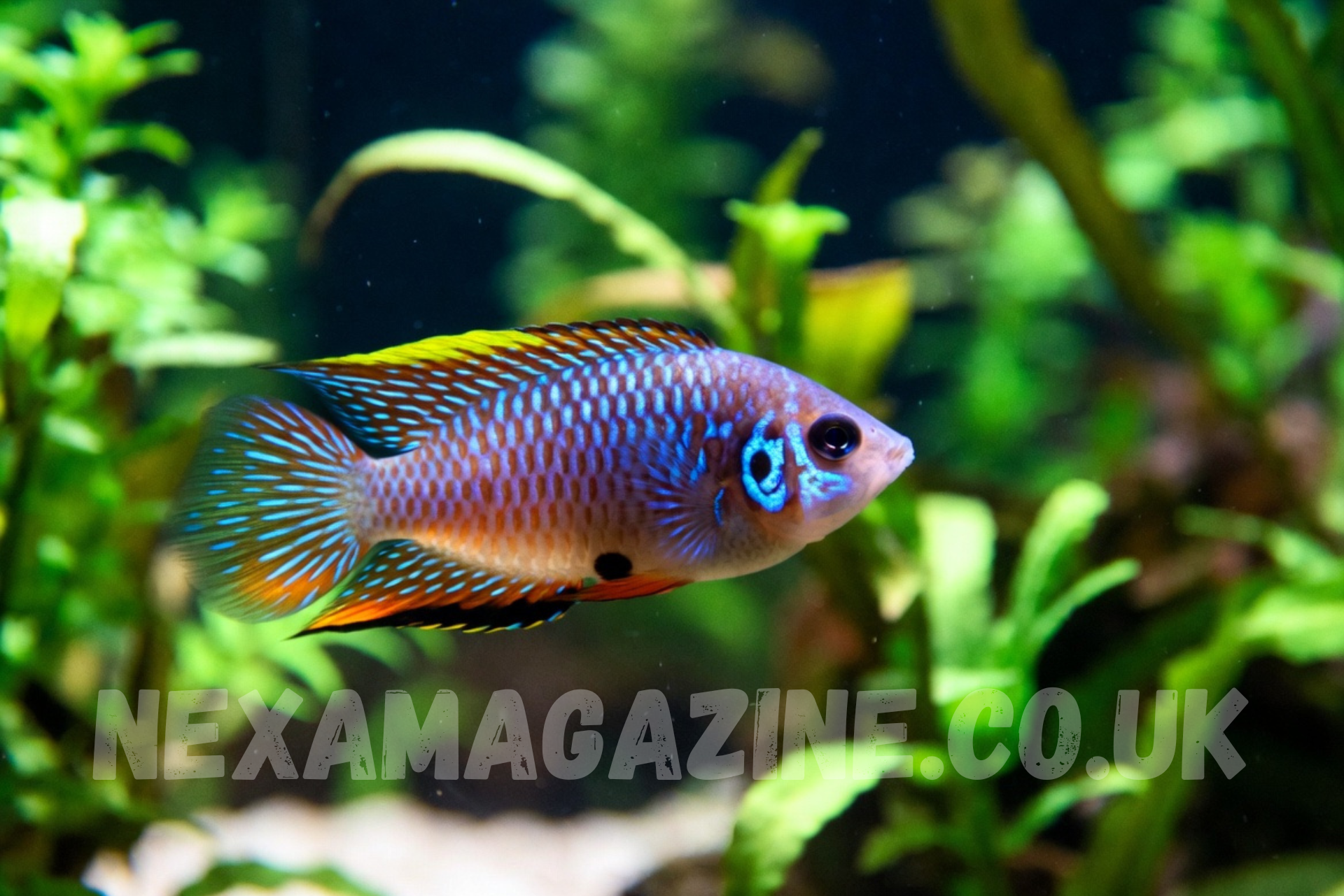
Peacock Gudgeon: The Vibrant Nano Fish Perfect for Community Aquariums
The Peacock Gudgeon (Tateurndina ocellicauda), also known as the Peacock Goby or Eye-spot Sleeper, stands out as one of the most eye-catching small freshwater fish available to hobbyists. With its iridescent blue, red, and yellow markings and a distinctive eyespot on the tail, this species brings constant movement and color to planted tanks. Unlike many gobies, it is a true freshwater fish that thrives in home aquariums, often spawning readily under the right conditions.
Native to the slow-moving streams and ponds of eastern Papua New Guinea, the Peacock Gudgeon stays small (reaching about 3 inches) and displays peaceful behavior, making it suitable for nano setups and community tanks with compatible species. Aquarists prize it for its hardiness, active foraging, and striking appearance that rivals more demanding fish. Whether you’re new to fishkeeping or an experienced aquarist, this guide covers everything you need to successfully care for and breed these beautiful fish.
Read More : Peacock Engineering Ltd Headcount Increase
Quick Facts
| Attribute | Details |
| Scientific Name | Tateurndina ocellicauda |
| Common Names | Peacock Gudgeon, Peacock Goby, Eye-spot Sleeper |
| Family | Eleotridae (sleepers) |
| Adult Size | Up to 7.5 cm (3 inches) |
| Lifespan | 4–5 years |
| Origin | Eastern Papua New Guinea |
| Tank Size (Minimum) | 15 gallons for a small group |
| Care Level | Beginner to intermediate |
| Diet | Omnivore / micropredator |
| Temperament | Peaceful, best in groups |
| Water Temperature | 72–79°F (22–26°C) |
| pH | 6.0–7.8 (ideally ~7.0) |
Natural Habitat and Distribution
The Peacock Gudgeon is endemic to the lowland rivers, streams, and shallow ponds of eastern Papua New Guinea. These waters are typically slow-moving or still, with soft to moderately hard parameters, abundant vegetation, leaf litter, and shaded areas from overhanging plants.
In the wild, they hover near the substrate in small groups or schools, foraging for small invertebrates and organic matter. The environment features fine sand or gravel bottoms, submerged roots, and dense plant cover that provides both food and shelter. This preference for calm, structured habitats explains their success in well-planted aquariums with gentle filtration.
Physical Characteristics and Identification
Peacock Gudgeons earn their name from vibrant, peacock-like coloration. Males typically display more intense blues and reds along the body, with elongated dorsal fins, while females often show slightly rounder bodies and prominent yellow bellies. Both sexes feature the signature black eyespot (ocellus) on the caudal peduncle, which helps confuse predators.
Adults reach a maximum of about 3 inches, with males slightly larger. Their bodies are somewhat elongated and robust for their size, and they lack the fused pelvic fins of true gobies—confirming their placement in the Eleotridae family. Coloration remains vivid year-round, intensifying during breeding or when displaying to rivals.
Peacock Gudgeon Care and Tank Setup
Tank Requirements
A 15-gallon tank suits a small group of 6–8 individuals. Larger tanks (20+ gallons) reduce territorial squabbles and allow for more companions. Use a fine sand or smooth gravel substrate to protect their delicate undersides.
Incorporate dense planting with species like Java Fern, Anubias, Cryptocoryne, and floating plants for cover. Add caves, driftwood, and rockwork for territories and spawning sites. Gentle filtration (sponge or low-flow HOB) is essential—strong currents stress these fish. Aim for moderate lighting to encourage plant growth without algae overload.
Water Parameters
- Temperature: 72–79°F (22–26°C)
- pH: 6.0–7.8 (stable around 7.0 ideal)
- Hardness: 5–12 dKH
- Ammonia/Nitrite: 0 ppm
- Nitrates: <30 ppm
Perform 20–30% weekly water changes with dechlorinated, temperature-matched water. Stability matters more than exact values.
Diet and Feeding
As micropredators and omnivores, Peacock Gudgeons thrive on a varied diet. Offer high-quality flakes or pellets as a base, supplemented with frozen or live foods like brine shrimp, bloodworms, daphnia, and micro pellets. Feed small amounts 2–3 times daily— they forage actively near the bottom and mid-water.
High-protein treats enhance coloration and health. They rarely overeat if portions remain appropriate.
Tank Mates and Compatibility
Peacock Gudgeons coexist peacefully with similarly sized, non-aggressive fish. Excellent companions include small rasboras, tetras, Corydoras catfish, otocinclus, shrimp, and snails. They also pair well with peaceful rainbowfish.
Avoid large, aggressive, or fin-nipping species. They do best in groups of their own kind (more females than males to minimize harassment). Males can become territorial during spawning but rarely cause serious harm with ample hiding spots.
Breeding Peacock Gudgeons
One of the rewarding aspects of keeping Peacock Gudgeons is their relative ease of breeding in captivity. They are cave spawners. Provide multiple small caves or overturned flowerpots.
Males select a site, clean it, and court females with displays. The female lays adhesive eggs, which the male fertilizes and then guards exclusively—fanning them and removing unfertilized eggs. Fry hatch in a few days and become free-swimming shortly after. Rear them on infusoria, microworms, or powdered fry food initially.
Success rates improve with stable parameters, plentiful food, and low stress. Many aquarists report natural spawning without intervention in well-maintained tanks.
Common Health Issues and Prevention
These fish are hardy but sensitive to poor water quality. Watch for signs of stress like faded color, clamped fins, or lethargy. Common issues include bacterial infections or parasites from unstable conditions or dirty water.
Prevent problems with regular maintenance, quarantine new fish, and a balanced diet. They have no unique diseases but respond well to standard freshwater treatments when needed. Lifespan reaches 4–5 years with proper care.
Why Hobbyists Love the Peacock Gudgeon
Search interest in this species stems from its combination of beauty, small size, and approachability. Nano tank enthusiasts appreciate the limited space requirement, while community tank keepers value the peaceful nature and constant activity. The vibrant colors and engaging behaviors—hovering, foraging, and occasional displays—make them a focal point without demanding expert-level care.
Source Verification
Information in this article draws from established aquarium resources, including care sheets from Aquarium Source, Fishkeeping.co.uk, and Aqua-Fish.net; scientific details from Wikipedia and species profiles; and breeder insights from Aquatic Arts and similar suppliers. Cross-referenced with hobbyist forums and recent publications for accuracy as of 2026. Always verify local availability and regulations.
FAQ
How big do Peacock Gudgeons get?
They reach a maximum of about 3 inches (7.5 cm), with males slightly larger than females.
Are Peacock Gudgeons true gobies?
No. Despite the common name “Peacock Goby,” they belong to the Eleotridae family (sleepers) and lack fused pelvic fins characteristic of true gobies.
What tank size for Peacock Gudgeons?
A 15-gallon tank works for a small group. Larger is better for community setups.
Do Peacock Gudgeons need live food?
They benefit from frozen or live foods like brine shrimp and bloodworms for optimal health and color, but accept quality prepared foods.
Can Peacock Gudgeons be kept with shrimp?
Yes, with larger shrimp species. They may snack on very small or baby shrimp, especially as micropredators.
How long do Peacock Gudgeons live?
With good care, expect 4–5 years in captivity.
Conclusion
The Peacock Gudgeon offers a perfect blend of striking visuals, easy care, and interesting behaviors for modern aquariums. Its adaptability to planted nano tanks and peaceful demeanor make it an excellent choice for hobbyists seeking something beyond standard community fish. Focus on stable water quality, varied nutrition, and ample hiding spots to enjoy years of vibrant activity and potential breeding success. Adding a group of these gems will transform any suitable tank into a dynamic underwater display.
