



Engaging Introduction
Remember those long afternoons in school or slow days at work when you just needed a quick escape? In 2026, GitHub games have become the ultimate solution for millions looking for free, instant fun without downloads or restrictions.
Whether you’re dodging network blocks with clever GitHub Pages-hosted titles or diving into massive open-source projects that rival commercial games, this world offers something for every type of player. As browsers get smarter and web technologies like WebAssembly evolve, these games deliver surprisingly rich experiences straight from your tab.
I’ve spent years exploring developer communities and testing these games across devices. What started as a way to kill time has turned into a deep appreciation for how GitHub empowers creators. In this guide, we’ll cover everything: the best playable games, how to find them, why they’re thriving now, and even tips for getting started with game development yourself.
By the end, you’ll see why GitHub games matter more than ever in a world craving accessible, creative entertainment.
What Are GitHub Games?
GitHub games generally fall into two exciting categories. First, there are the browser-based unblocked games hosted on GitHub Pages (.github.io domains). These are lightweight HTML5 titles that load instantly and often bypass school or office filters.
Second, and perhaps more profoundly, are the thousands of open-source game projects living directly in GitHub repositories. These range from simple clones of classics like 2048 to full-fledged engines and ambitious indie titles.
The beauty lies in transparency. You can play the game, read the code, fork it, and make it your own. This open ecosystem has exploded in recent years thanks to better tools, active communities, and events like GitHub Game Off.
Why it matters in 2026: With privacy concerns, data-heavy apps, and restrictive networks, these games offer freedom. No app stores, no tracking, just pure play.
Why GitHub Games Are Exploding in Popularity
The surge isn’t accidental. Several trends converged to make GitHub the perfect home for games.
Developers love the platform’s version control, collaboration features, and free hosting. Students and casual players appreciate instant access without installations. In an era of expensive consoles and subscription fatigue, free and open options feel refreshing.
From my experience testing dozens of these, the replayability and community-driven updates keep people coming back. One week you might play a Flappy Bird clone; the next, you’re contributing to a roguelike.
Search interest has grown steadily, especially for unblocked versions. People want entertainment that respects their time and restrictions.
Top Unblocked GitHub Games You Should Try Today
These browser-based hits dominate “GitHub games” searches for good reason — they’re fun, fast, and accessible.
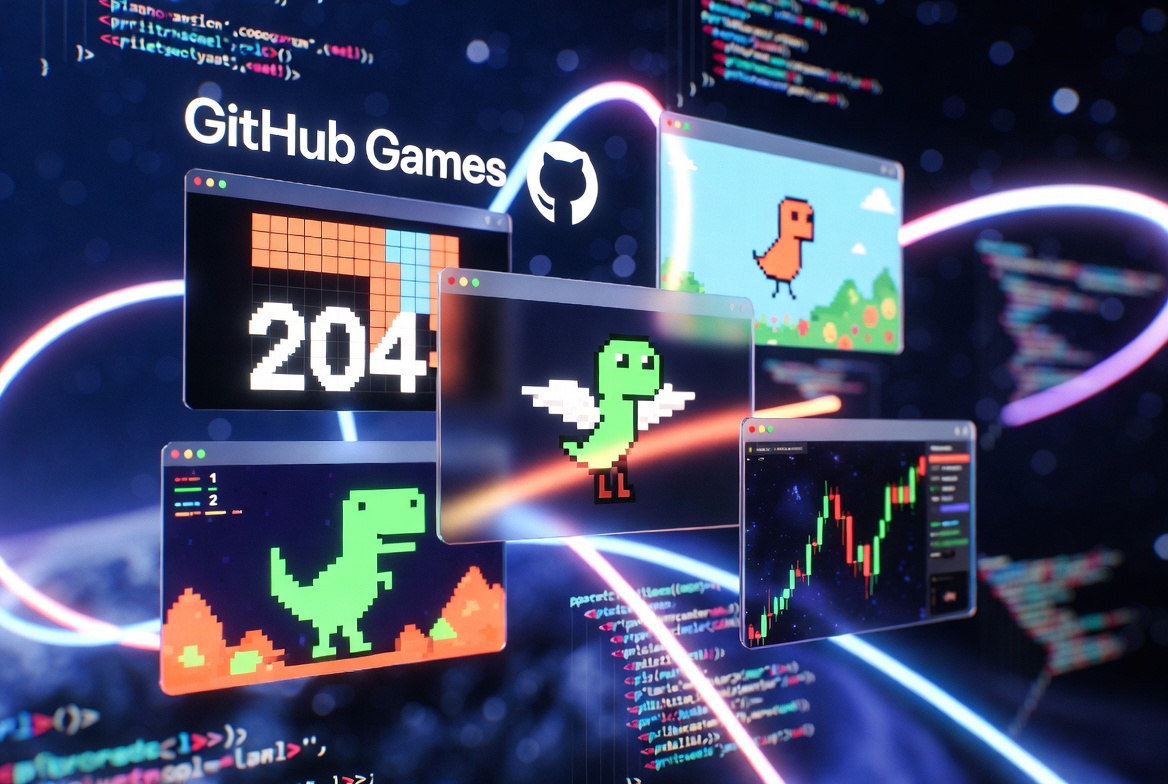
- 2048: The sliding puzzle that hooked millions. Simple yet endlessly addictive as you combine tiles to reach 2048.
- Flappy Bird Clones: Countless versions exist. The original frustration translated perfectly to web.
- Chrome Dino Runner: The offline dinosaur game, remade with power-ups and endless variations.
- Moto X3M and Vex series: Physics-based challenges that test your timing and patience.
- Cookie Clicker: Idle clicking at its finest — watch numbers explode as you build an empire.
- Among Us fan versions and Ages of Conflict: Strategy and social deduction in bite-sized form.
Many collections compile these into single sites for easy browsing. Sites like nb-ga.github.io or similar hubs let you jump between dozens without hunting.
Pro tip: Use Ctrl + F on long game lists for quick navigation.
Best Open-Source Games on GitHub for Serious Players
Beyond quick browser fun, GitHub hosts incredible full games.
Popular standouts include remakes and originals across genres:
- OpenMW: A reimplementation of The Elder Scrolls III: Morrowind — perfect for fans wanting modern features.
- Endless Sky: Space trading and combat that feels like a spiritual successor to classics.
- osu!lazer: The open rewrite of the popular rhythm game.
- Roguelikes like those featured in GitHub’s own roundups, which thrive on community longevity.
Lists like leereilly/games (even if archived) and Trilarion’s Open Source Games List remain goldmines for discovery.
These projects demonstrate real expertise in game development. Many use engines like Godot (increasingly popular on GitHub) or custom setups.
How to Find and Play GitHub Games Effortlessly
- Search GitHub directly for “game html5” or specific titles.
- Check curated collections under the “game” topic.
- Visit dedicated hubs — many .github.io sites aggregate the best unblocked options.
- For development-focused ones, look for repos with live demos (usually a gh-pages branch).
Always verify activity — recent commits signal maintained projects. Forking lets you experiment safely.
Getting Started with Your Own GitHub Game Development
One of the most rewarding aspects is creating something yourself. GitHub lowers the barrier dramatically.
Start small: Fork a simple JavaScript game and tweak the mechanics. Use free assets and learn version control through real contributions.
Tools like Godot export beautifully to web. GitHub Actions can automate builds and deployments. Game Off jams provide themes and deadlines that spark creativity.
I’ve seen beginners evolve into contributors by starting with bug fixes in popular repos. The community is welcoming if you show genuine interest.
The Role of GitHub in Modern Game Development
GitHub isn’t just hosting — it’s shaping how games get made. Features like Discussions, Issues, and Projects help teams coordinate. Sponsors let creators earn from passion projects.
In 2026, integration with AI tools speeds up prototyping. Open-source principles foster innovation that closed studios often miss.
Why it matters: This democratizes game creation. A student in a small town can build something played by thousands worldwide.
Challenges and Considerations for GitHub Games
Not everything is perfect. Browser performance limits complex 3D. Asset licensing requires care. Some unblocked sites face takedowns, though the ecosystem adapts quickly.
For players: Be mindful of school policies. For developers: Choose licenses carefully (MIT, GPL, etc.) to match your goals.
Security-wise, stick to well-starred repos to avoid malicious code.
Trends Shaping GitHub Games in 2026 and Beyond
WebGPU is unlocking better graphics. Multiplayer via WebSockets grows. Procedural generation keeps games fresh with less manual content.
Communities around specific engines or jam events thrive. Educational games for learning coding or other skills gain traction.
Expect more hybrid experiences — games that teach while entertaining.
Quick Information Table
| Aspect | Details |
|---|---|
| Topic | GitHub Games |
| Category | Web Gaming, Open Source, Unblocked Games |
| Search Trend | Rising (unblocked + open source interest) |
| Main Focus | Browser-based play and collaborative development |
| User Intent | Entertainment, learning, bypassing restrictions |
| SEO Importance | High for discovery of free gaming resources |
| Best For | Students, developers, casual players |
| Industry Trend | Growth in open web gaming and creator tools |
Advanced Tips for Maximizing Your GitHub Gaming Experience
Customize your setup: Use browser extensions for better fullscreen or ad-blocking (ethically). Track favorite repos with GitHub’s “Star” and lists.
Contribute back — even small translations or documentation help. Join Discord communities linked in popular repos for real-time advice.
For parents or educators: These can be teaching tools. Analyze code to understand logic, physics, or design.
How GitHub Games Compare to Traditional Platforms
Unlike Steam or mobile stores, there’s no gatekeeping. Quality varies, but gems emerge through community validation (stars, forks).
The learning curve for playing is zero; for creating, it’s as steep as you want. This flexibility is unmatched.
Future of Gaming on GitHub
As AI assists code generation and VR/AR web standards mature, expect boundary-pushing experiments. GitHub will likely remain central as the hub for sharing these innovations.
The spirit of openness ensures games stay accessible and evolvable.
FAQs
What are the best GitHub games to play unblocked? Popular choices include 2048, various Flappy Bird and Moto X3M versions, Cookie Clicker, and Dino Runner. Check curated .github.io collections for easy access.
Are GitHub games safe to play? Most are, especially from high-star repositories. Stick to well-maintained projects and avoid suspicious links. Browser sandboxing adds protection.
Can I play GitHub games on mobile? Many work well in mobile browsers, though touch controls vary. Some have responsive designs optimized for phones.
How do I create my first game on GitHub? Start with a simple HTML5/JavaScript template. Use GitHub’s template repositories, commit changes, and enable GitHub Pages for instant hosting.
Is GitHub good for learning game development? Absolutely. Reading real code, participating in jams, and forking projects provide practical experience better than many tutorials.
Do GitHub games require downloads? No — most browser versions run directly. Full source downloads are optional for modification.
What happened to popular game lists like leereilly/games? Many classic lists were archived as the ecosystem grew, but new comprehensive resources and topic pages have taken over.
Are there multiplayer GitHub games? Yes, several support real-time play via web technologies. Check repos for features like shared sessions or leaderboards.
Conclusion
GitHub games represent more than just free entertainment — they embody creativity, accessibility, and community in the best possible way. Whether you’re unwinding with a quick unblocked classic or diving deep into open-source development, the platform delivers quality experiences that respect your time and curiosity.
As someone who’s followed this space for years, I can confidently say the best is yet to come. The combination of passionate creators, evolving web tech, and an open platform ensures GitHub will keep producing surprises.
Next time you need a break or inspiration, explore a few repos. You might just find your new favorite game — or the spark to build one. Happy playing, and keep creating. The world needs more joyful, shareable experiences like these.
Example:
